
Species
What is a saiga?
A remarkable antelope. A vital part of the steppe. A species worth protecting.
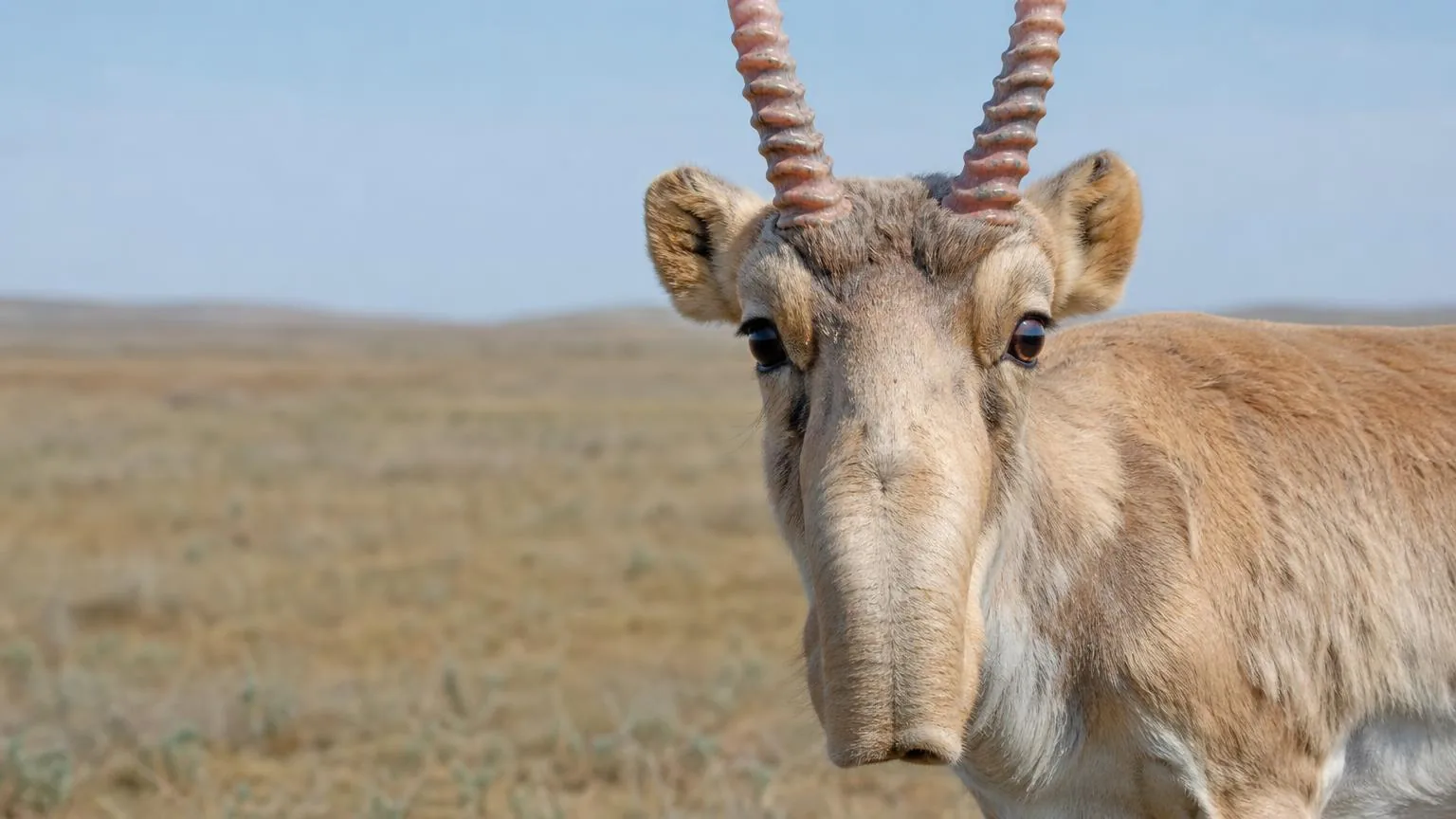
The saiga is an antelope of the Eurasian steppe, and one of the oldest surviving large mammals in the world — it shared this landscape with mammoths. It is instantly recognisable from its bulbous, downward-facing nose, and almost as instantly forgettable to anyone who has never seen one, which is much of the problem.
Saigas live in herds, move long distances between seasonal grazing, and give birth in an extraordinary synchronised burst each spring. Everything about them is built for open grassland: the speed, the migration, the nose that filters summer dust and warms winter air. It is also what makes them so exposed when that grassland is cut up, fenced, or emptied of the herders who have always shared it.
Factsheet
The saiga at a glance
The short answers, in one place — for anyone who wants the facts before the story.
Scientific name
Saiga tatarica
Conservation status
Near Threatened
Shoulder height
50–80 cm
Adult weight
20–50 kg
Lifespan
6–10 years
Top speed
Up to 80 km/h
Annual migration
Up to 1,000 km
Diet
Grasses, herbs and shrubs
That nose
Filters dust, warms cold air
Horns
Males only, amber and ridged
Calving
Often twins, born in days
Herd size
Tens to tens of thousands
Predators
Wolves, foxes, eagles
Range states
Kazakhstan, Mongolia, Russia, Uzbekistan
Appearance & behaviour
Built for the steppe
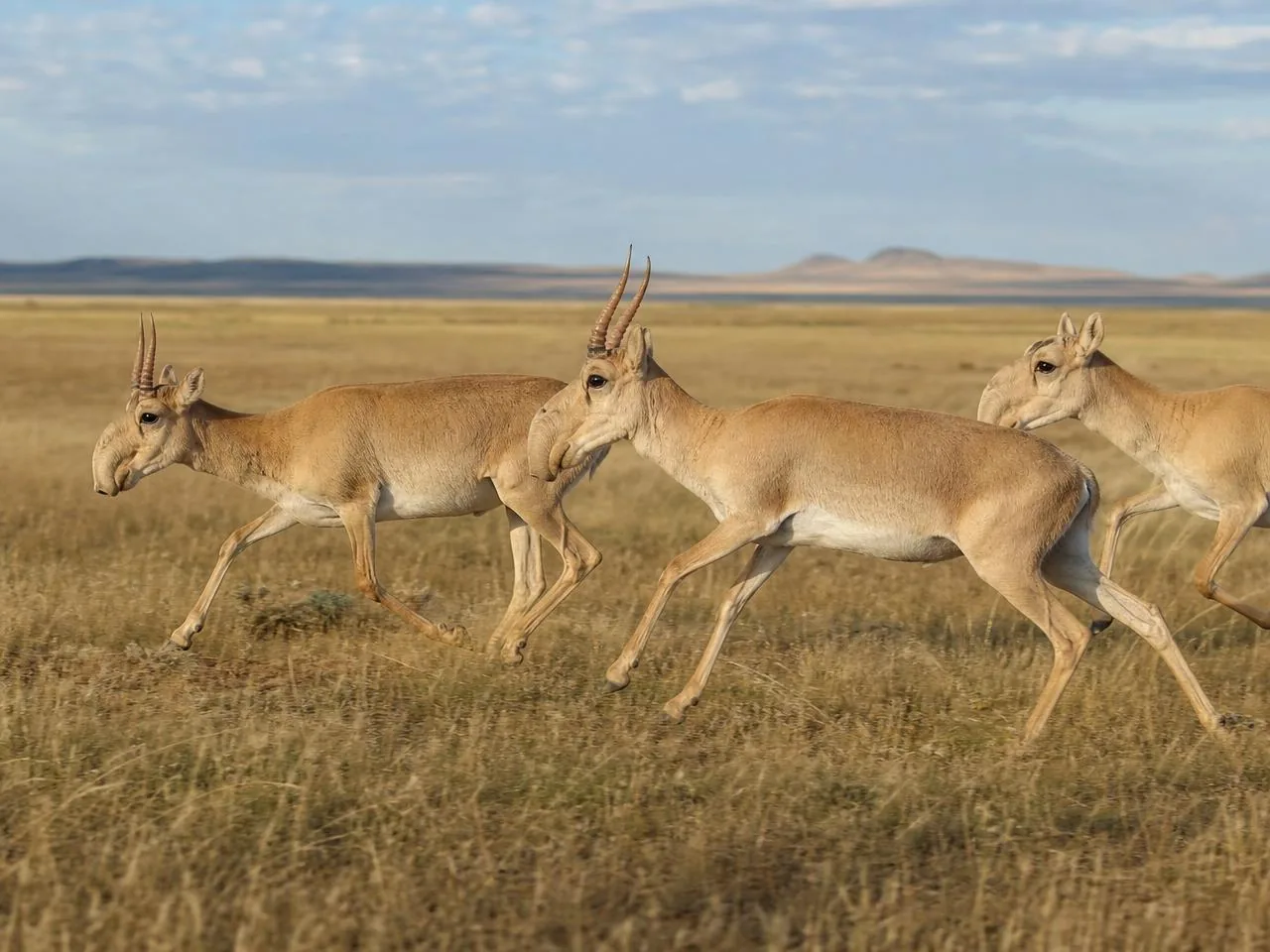
Saigas are shaped almost entirely by the demands of open grassland. The distinctive nose warms cold air in winter and filters dust thrown up by moving herds in summer, and their long legs are built for covering distance rather than for cover.
They form large herds and undertake long seasonal migrations in search of food and water. Calving is highly synchronised — most calves in a population are born within a week — which is both a remarkable survival strategy and a moment of extreme vulnerability.
Distribution
Where saigas live
Almost all the world’s wild saigas live in Kazakhstan, across the vast steppe and semi-desert of the country’s centre and west. Smaller populations survive in Mongolia, in the Russian Federation, and in Uzbekistan, where herds cross seasonally from neighbouring range states.
Within those countries, saigas are not evenly spread. Herds concentrate where grazing and water allow, which means a large share of a national population can occupy a comparatively small area at certain times of year — most dramatically at calving, when tens of thousands of animals gather in a matter of days.
They also move. Seasonal migrations of several hundred kilometres are routine, and the routes shift year to year with rainfall and disturbance. Protecting saigas therefore means protecting a landscape rather than a place: the grazing, the water, and the corridors that join them.
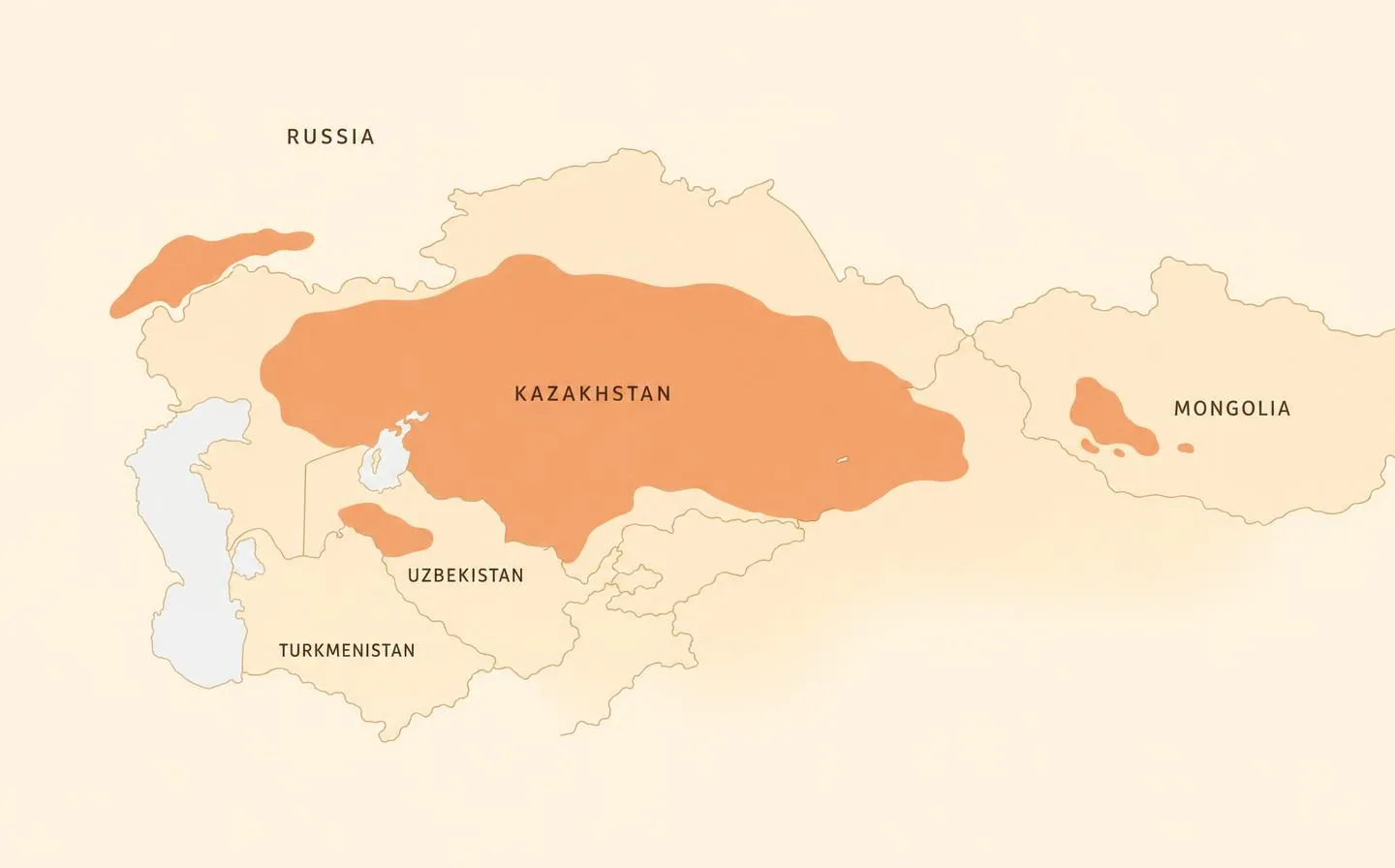
Saiga populations are concentrated in Kazakhstan, with smaller populations in Mongolia, Uzbekistan and the Russian Federation.
Support our work
Keep them moving
Saiga herds cross hundreds of kilometres of open steppe every year. Your support helps keep those routes open, protected and safe.