
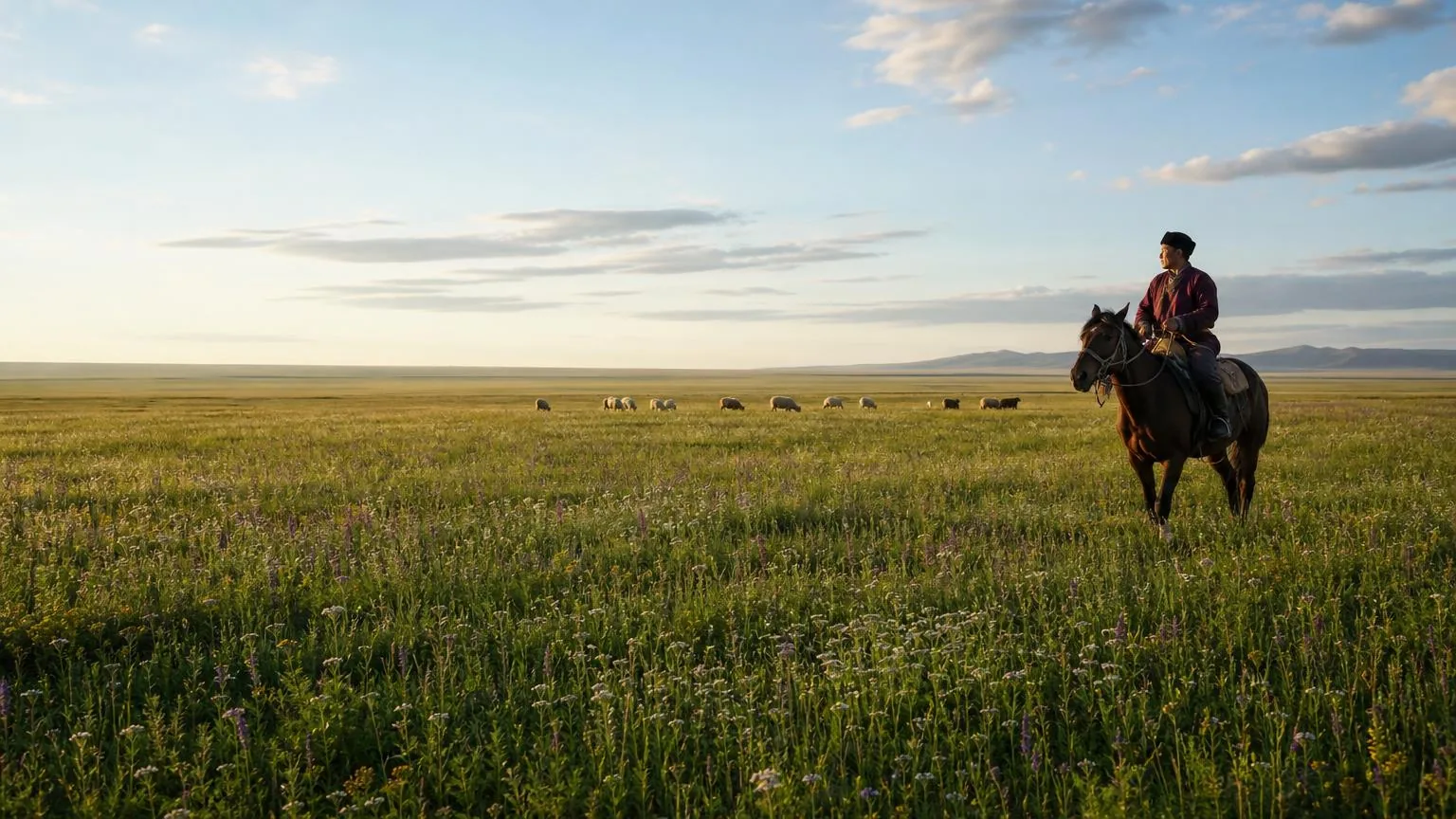
About saigas
Why saigas matter
A grazing species that shapes the grassland, and a cultural presence far older than any border on the map.
Saigas are not simply a species that happens to live on the steppe — they are part of how the steppe works, and part of how the people there understand where they live. Losing them would mean losing a functioning grassland and a piece of cultural memory at the same time.
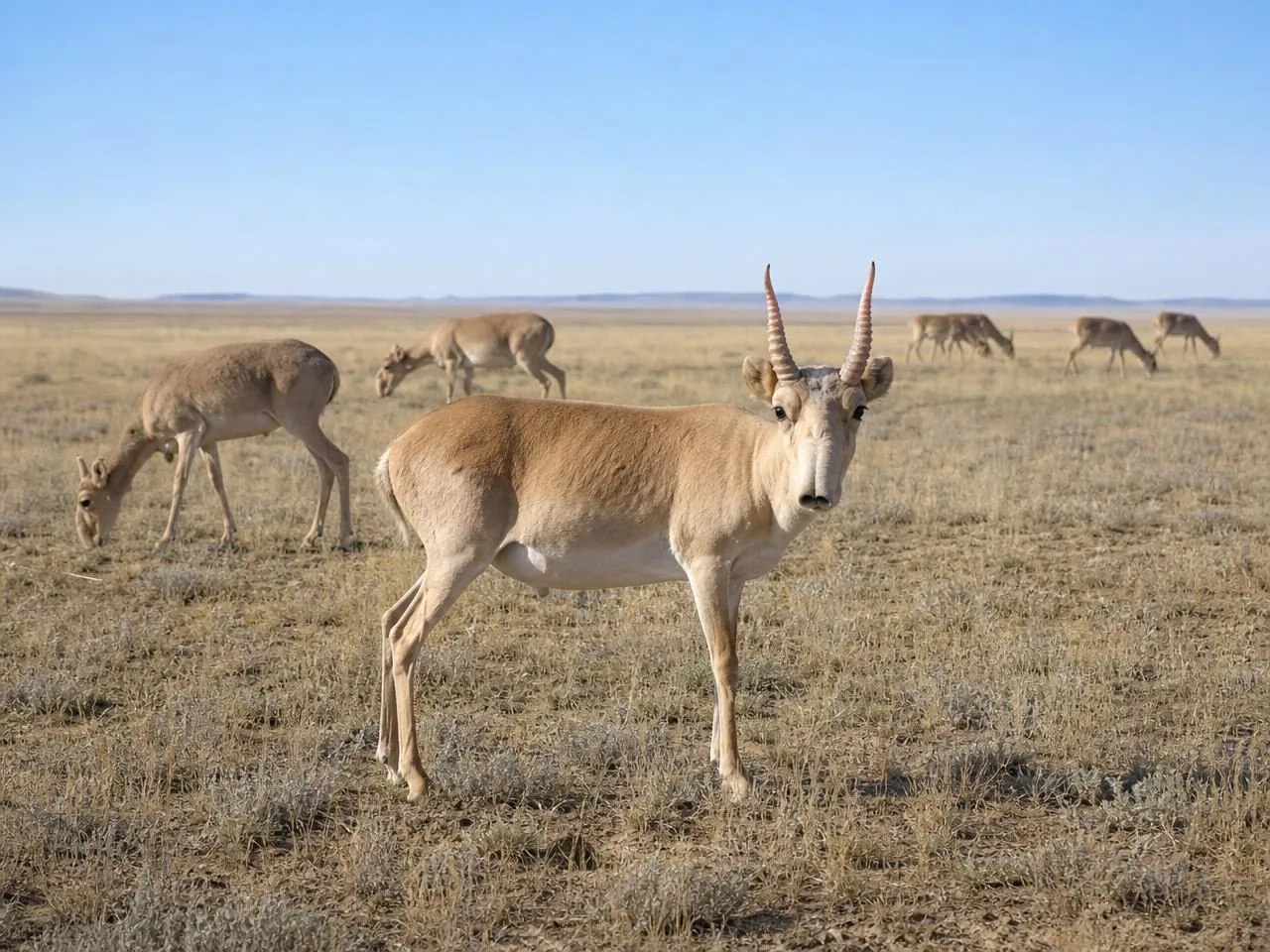
Ecological significance
A keystone of the grassland
Grazing by large herds prevents any single plant community from dominating, maintaining the mosaic of grasses and herbs that a healthy steppe depends on. Where saigas disappear, that mosaic simplifies — and with it goes much of the wider biodiversity the grassland supports.
Their long-distance movements carry nutrients and seeds across landscapes that would otherwise be far more fragmented. Few other species on the steppe operate at that scale, and none can replace it.
Saigas are also prey. Wolves, foxes, eagles and scavenging birds all depend to some degree on a species that arrives in numbers and moves on again, and a steppe without saigas is a thinner place for all of them.
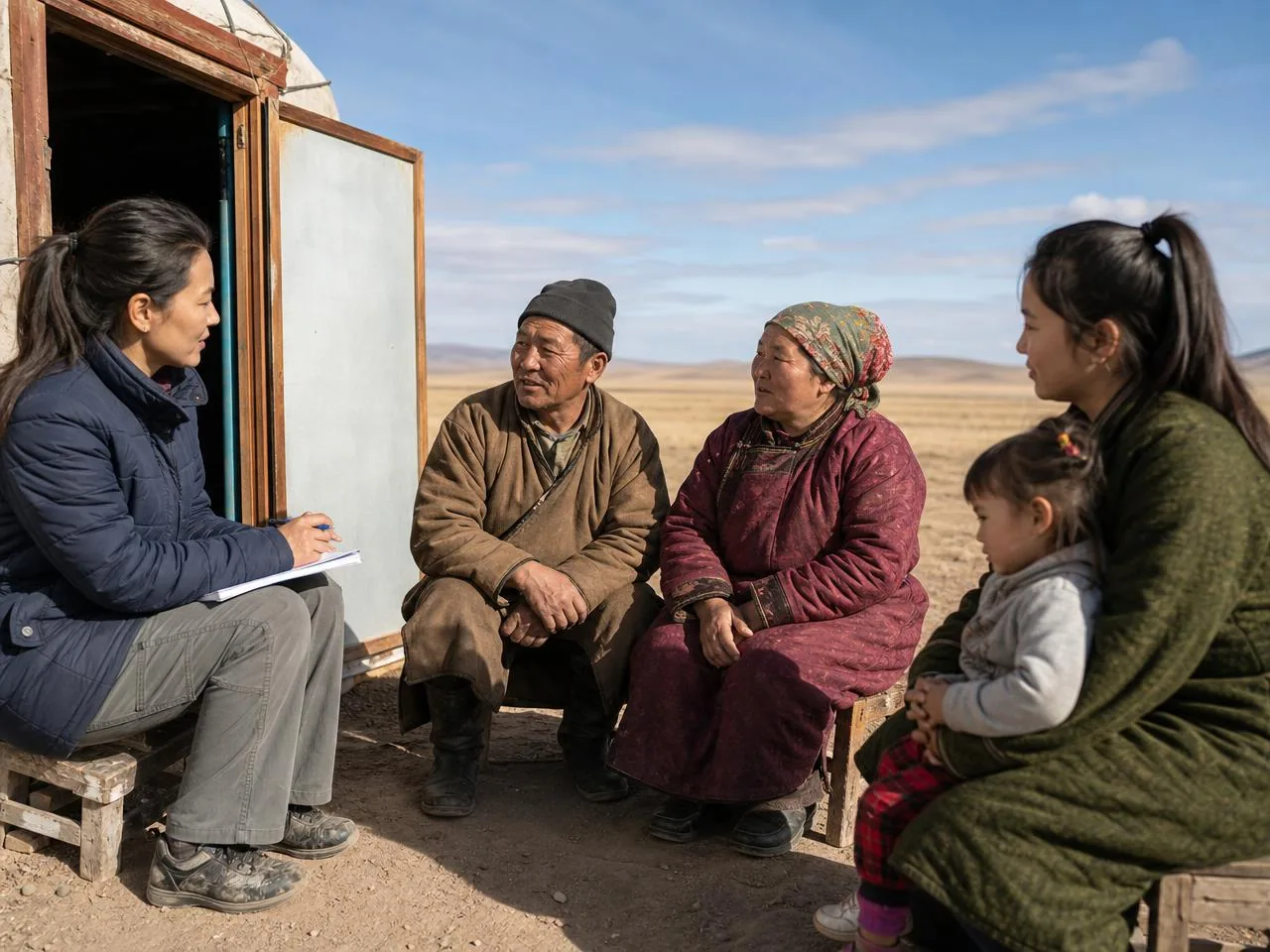
Cultural significance
Older than any border on the map
Saigas appear in the folklore, songs and decorative traditions of communities across the range, and in petroglyphs that predate every state now responsible for protecting them. They are part of how the steppe is described by the people who live in it.
That memory is not evenly held. In places where herds have been absent for a generation, younger people may never have seen one, and the species survives locally as a story rather than as an animal.
Where saigas do return, they carry a good deal with them. Communities that once counted their disappearance as a loss now count their recovery as something achieved locally — which is a far more durable basis for conservation than any external programme.
A species worth keeping
The case for saigas is not sentimental. They hold a grassland ecosystem together, they connect landscapes that human infrastructure keeps dividing, and they matter to the communities who share the steppe with them. A species that has survived since the Pleistocene has now come within a decade of disappearing twice in living memory — and both times, it was people who turned it around.
You may also be interested in
Support our work
Keep them moving
Saiga herds cross hundreds of kilometres of open steppe every year. Your support helps keep those routes open, protected and safe.